
If your main water line has one leak and the pipe around it is still in good shape, repair it. If it is old galvanized or polybutylene, has leaked more than once, or keeps losing pressure, main water line replacement is usually the better use of your money.
The main water line is the buried pipe that runs from your water meter, usually near the street, to the point where the water enters your house. In most cities the meter and everything on the street side belong to the city. The line from the meter to your house usually belongs to you, so the repair or replace decision is yours to make. If you are not sure where that boundary sits, check with your city's water department.
I'm Terrill Dobbs, the master plumber who owns TD Plumbing Solutions. Here is how I think this question through.
First, Confirm the Leak Is on the Main Line
Before you decide anything, make sure the problem is really the buried line and not a toilet, a water heater valve or a pipe inside a wall. The simplest test uses your meter. The EPA's WaterSense program suggests you check your water meter before and after a two-hour period when no water is being used. If the meter changes at all, you probably have a leak somewhere.
A moving meter with every tap off, plus one or more of these, points toward the main line:
- A soggy or sunken spot in the yard between the meter and the house.
- Grass that stays green in one strip during a dry spell.
- Water standing in the meter box when it has not rained.
- A water bill that jumps with no change in how you use water.
- Weaker pressure at every fixture in the house, not just one.
If those signs fit, the next question is whether one fix will hold or whether the pipe is done.
The Six Factors That Decide Repair or Replace
No single factor makes the call. Usually two or three of these point the same way.
1. Pipe age and material
What the line is made of tells you a lot about how much life is left in it.
| Pipe material | What usually happens with age | Usual answer |
|---|---|---|
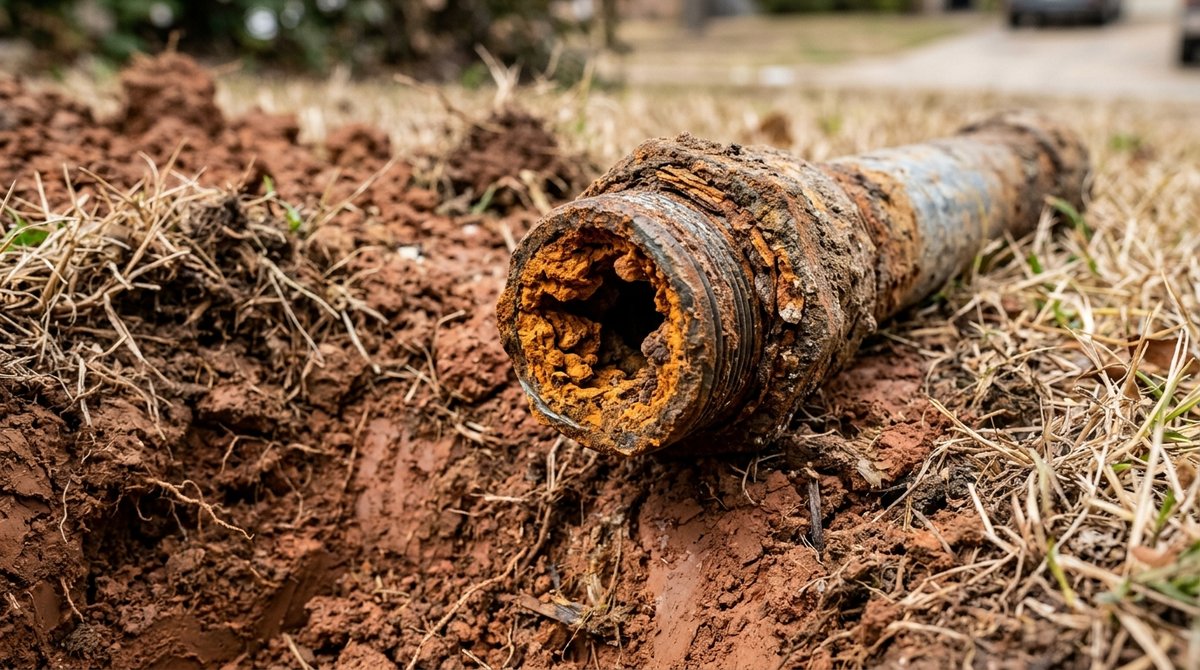
| Galvanized steel | Rusts from the inside, narrows with scale, snaps at threaded joints | Replace once it starts leaking |
| Gray polybutylene | Turns brittle and fails at fittings with age | Replace, even if only one leak so far |
| Older copper | Can develop pinholes or split where the soil has moved it | Often repairable if the rest of the pipe is sound |
| Newer PVC, PEX or copper | Usually fails from a single cause, like a shovel or a root | Usually a repair |
Many homes in Benbrook and older parts of Fort Worth were built in the 1950s and 1960s. Plenty of them still have their original galvanized line in the yard. Homes from the 1980s and early 1990s are the ones most likely to have gray polybutylene.
2. How many times it has leaked
One leak on a line is a repair. A second leak in a different spot a year later is a warning. A third means the pipe itself is wearing out, and each repair only fixes the few feet you uncovered.
3. Where the break is
A leak in open lawn is the easiest kind to repair. A leak under a driveway, a sidewalk, a patio or a large tree takes much more work to reach. If the break is under concrete and the pipe is already old, replacing the whole line on a new path that goes around the concrete can make more sense than breaking the slab to patch one spot.
4. Clay soil movement
North Texas clay shrinks hard in a summer drought and swells again after heavy rain. A buried line crossing that ground gets pushed and pulled every year. If your line keeps breaking in the same stretch, the soil there is likely moving more than the rest of the yard, and another patch will face the same stress. I cover the soil side in more detail in how drought and shifting soil can crack your underground water line.
5. Water pressure
A repair stops a leak. It does not clear the rust and scale that build up inside old galvanized pipe, and our hard water adds to that buildup over the years. If pressure was low before the leak and stays low after the repair, the opening inside the pipe has likely narrowed. A new line can bring pressure back, as long as the drop is really in the yard line and not inside the house. I check where the pressure falls off before I suggest replacing anything.
6. Discolored water
Rusty water at every tap, especially first thing in the morning, often means the line is rusting before water reaches your house. Rust at only one faucet points to something inside.
Quick Guide: Repair or Replace
| Your situation | Usually points to |
|---|---|
| First leak, newer pipe, easy access | Water line repair |
| Damage from digging or a single root | Repair |
| Galvanized or polybutylene line that has started leaking | Replacement |
| Second or third leak in a different spot | Replacement |
| Low pressure or rusty water that repairs do not fix | Replacement |
| Old pipe with the break under a driveway or slab walk | Replacement on a new route |
If your situation sits between two rows, I would rather tell you a repair will hold than sell you a new line you don't need, and I'll say so plainly either way.
What Main Water Line Replacement Involves
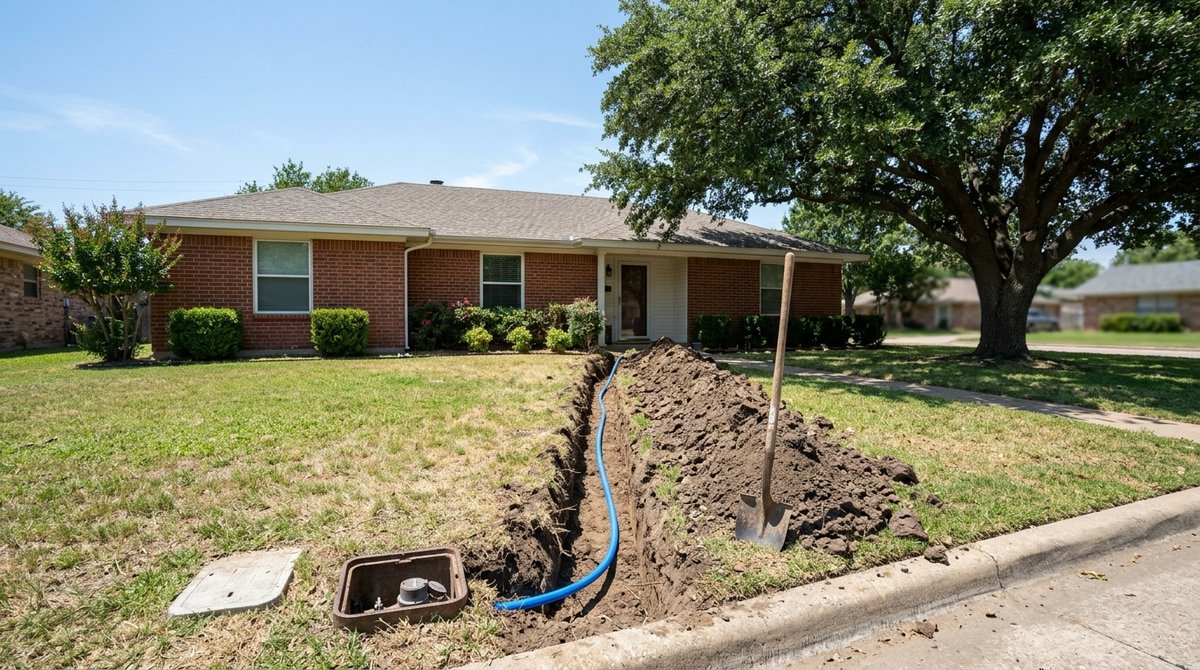
A full main water line replacement swaps the whole buried run from the meter to your house for new pipe. Most jobs follow the same steps:
- Check the old line. I look at the material, the leak history and the route, and confirm that replacing is the right call.
- Price before work. You get the full price, including permits where your city requires them, before any digging starts.
- Dig the route. We dig a trench from the meter side to the house, working around trees, walks and fences where we can.
- Lay the new line. The new pipe is rated for buried use and approved in your city. It goes in as one continuous piece where possible, with fewer joints for the soil to work on.
- Test and switch over. The new line is pressure tested. Then we switch the house over, check for leaks and fill the trench back in.
The old pipe is usually cut off at both ends and left in the ground, which saves digging. Most replacements take about one to two days. Your water is off for part of one day, mostly during the switch-over.
The work is permitted and inspected through the city where required. Benbrook, Fort Worth and the other cities around us each set their own rules, so check with your city or let us handle it as part of the job.
What Drives the Cost of a New Water Line
Every yard is different, so a fair price needs someone to walk the route. These are the things that move the number:
| Cost factor | Why it matters |
|---|---|
| Distance from meter to house | A longer run means more digging, more pipe and more time |
| What sits on the route | Driveways, walks, trees and fences take extra work to get under or around |
| Line size | Going larger for a house with more bathrooms costs a little more up front |
| Depth and soil | Deeper pipe and hard, dry clay slow the dig |
| Connections at each end | Old fittings at the meter side or a worn shutoff at the house may need replacing too |
| Permit and inspection | City fees and inspections, where required, are part of the job |
A repair costs less than a replacement on the day you pay for it. The honest comparison is a repair plus the next repair plus the one after that, against one new line. On an old galvanized or polybutylene line, that math usually favors replacement.
We put the price on the table before work starts: clear upfront pricing, zero sales pressure. Financing through Hearth is available if you would rather spread the cost of a new line.
FAQ
Can I replace my main water line before it breaks?
Yes, and that is often the smart move. If your line is old galvanized or polybutylene, or has already leaked more than once, replacing it on your own schedule beats a break on a holiday weekend.
Will a new main water line fix low water pressure?
It can, if the old line is choked with rust and scale or is too small for the house. If the pressure drop is inside the house, a new yard line won't fix it. That is why I check where the pressure falls off first.
Do I need a permit to replace a water line?
Many cities require one, and the rules differ from city to city. Where a permit is needed, the work is permitted and inspected through the city, and the cost is built into the price you get before work starts.
Is a leak at the meter my responsibility?
Usually the city handles the meter and the street side, and the line from the meter to your house is yours. Check with your city's water department if you are not sure which side the leak is on.
Talk to the Master Plumber Who Will Do the Work
If your line has leaked before, runs rusty or never got its pressure back, it is worth a straight answer before the next break. I look at the line myself, tell you whether a repair will hold or it is time for a new one, and give you the price before any digging starts. Learn more about water line replacement in Benbrook and Greater Fort Worth, see our Benbrook plumbing service, or contact us and call to set up a visit.