
Water heater replacement cost in Benbrook depends mostly on the size of the tank, whether it runs on gas or electric, and where it sits in the house. Venting, code updates, a switch to tankless and the permit can add to the total. Two neighbours with the same brand of heater can get very different quotes for good reasons, and this guide explains those reasons so you can read a quote with confidence.
Why No Two Water Heater Replacements Cost the Same
A like-for-like swap is the simplest job: same size, same fuel, same spot, sound connections. Most replacements are not that simple, because the old heater was put in years ago under different rules, sits somewhere hard to reach, or was sized for a smaller household.
Here are the factors that move the price the most:
| Cost factor | Why it changes the price |
|---|---|
| Tank size | A bigger tank costs more and can be harder to get into place |
| Gas or electric | Each has its own hookup, and switching fuels adds work |
| Location | Attic and closet installs take longer than a garage floor |
| Venting | Gas heaters need a vent that drafts properly and meets current rules |
| Code updates | Expansion tank, drain pan, relief valve line and gas fittings may need updating |
| Tank to tankless | New gas line sizing, new venting and new mounting |
| Permit and inspection | Required by the city for many replacements |
| Removal of the old unit | Draining, carrying out and disposing of the old tank |
Our water heater installation service starts with a look at your current setup. Terrill checks the old heater, the vent, the gas or power supply and how your household uses hot water, then puts the price on the table before any work starts.
Tank Size: Matching the Heater to Your Household
Size is one of the first things that sets the cost. A larger tank costs more to buy, weighs more and takes more effort to carry through a hallway or up an attic ladder. But buying too small costs you in a different way: cold showers and a heater that works harder than it should.
How many people live in the home matters more than most people expect. According to the U.S. Energy Information Administration, a four-person household in 2015 used nearly twice as much energy for water heating as a two-person household, about 24% of its overall energy use compared with 16%. A family that has grown since the last heater went in may need more capacity now.
More people, a new bathroom, a large soaking tub or back-to-back morning showers all point toward a bigger tank or a different type of heater.
Going up a size can also mean a bigger vent connector, a larger gas supply or a different circuit, which is why sizing gets checked before a price is given.
Gas vs Electric: How Fuel Type Changes the Job
If your home already has a gas water heater, keeping the same fuel is usually the most direct path. A gas replacement means reconnecting the gas line, the vent and the water lines, then checking for leaks and a proper draft. An electric replacement means reconnecting the water lines and the wiring, with no vent to worry about.
Switching fuels is where the cost changes the most:
- Electric to gas needs a gas line run to the heater and a vent path out of the house. If you do not have gas service near the heater, our gas line installation work comes into the picture.
- Gas to electric means capping the gas line safely and providing a dedicated circuit with enough capacity, which is electrical work on top of the plumbing.
Neither direction is wrong. We explain the tradeoffs and price both options if you ask.
Attic Installs: Why Location Matters in North Texas
Gas water heaters in the attic are common across Benbrook and Greater Fort Worth. They save floor space, but they make replacement slower. The old tank has to be drained, brought down a pull-down ladder and carried out, and the new one has to go up the same way. In July and August, attic heat also limits how long anyone can safely work up there.
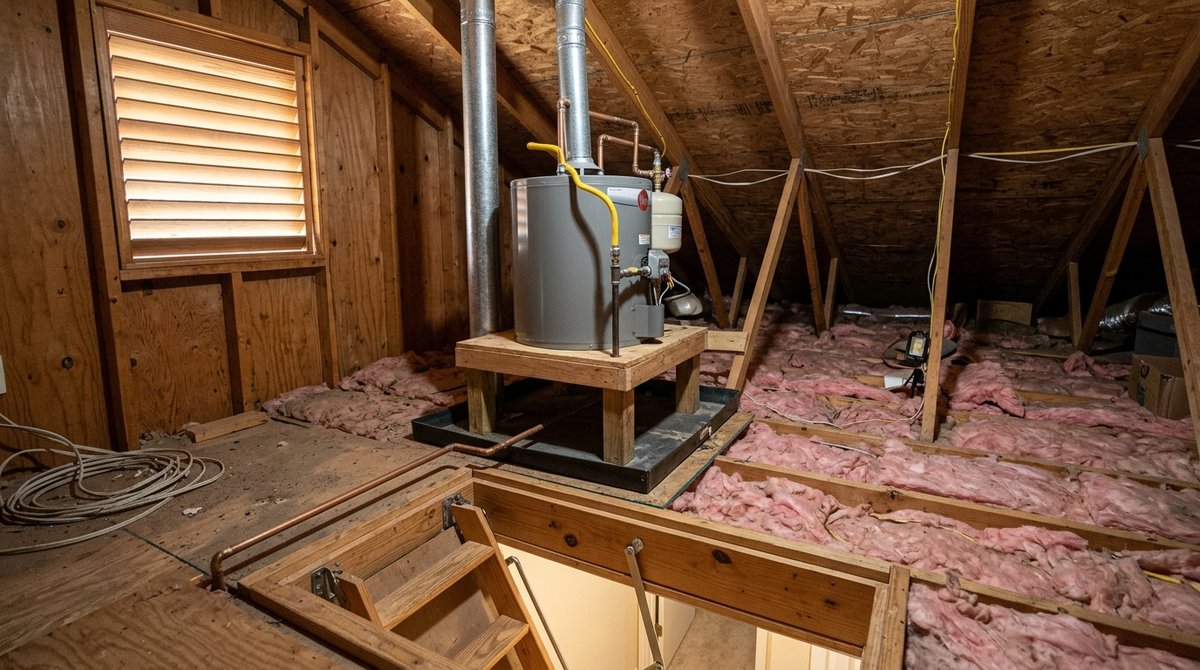
An attic heater also has to be set up so a leak does not come through your ceiling. That usually means a drain pan under the tank with a line that carries water somewhere safe. If your current attic heater has no pan, or the pan line is cracked or disconnected, that gets fixed as part of the replacement.
Garage installs are usually the easiest to reach. Interior closets are tighter, and in older 1950s and 1960s homes the heater sometimes sits in a small closet or utility room built around a smaller tank than is common today.
Venting and Code Updates That Can Add to the Cost
Plumbing rules change over the years. When an old heater comes out, the new one has to go in to today's standards, not the ones that applied when the house was built. This is often the part of a quote homeowners do not expect.
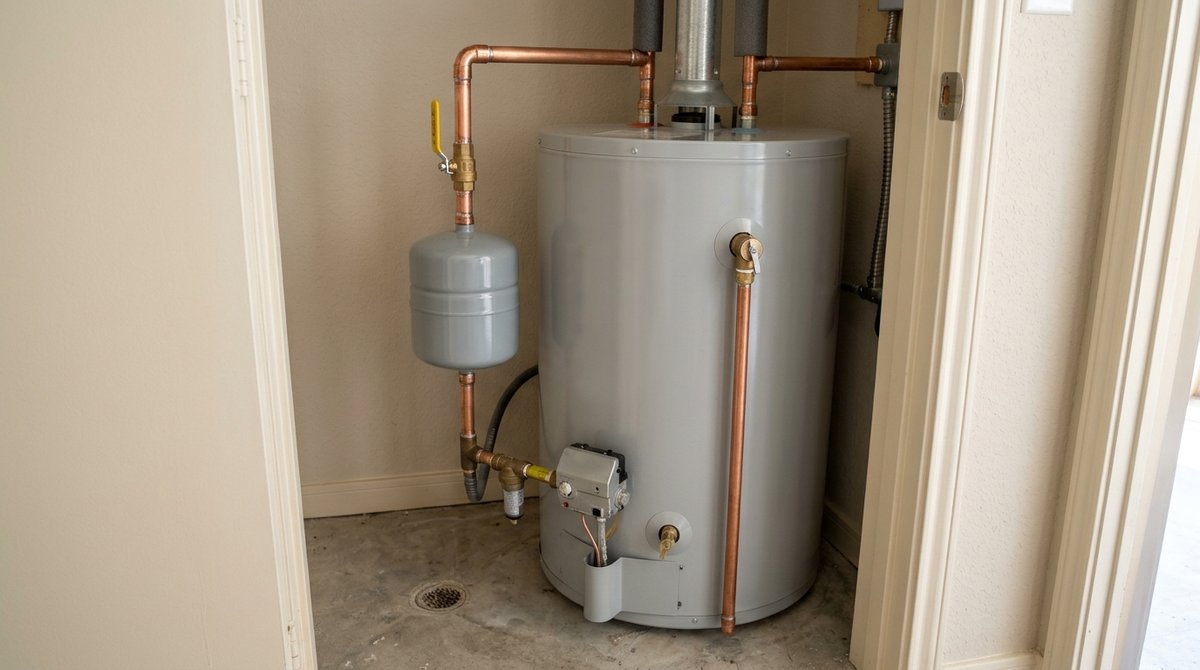
Common updates on a replacement:
- Expansion tank: a small tank on the cold line that gives heated water room to expand. Many homes need one when the water system is closed off by a pressure regulator or check valve.
- Drain pan and pan line: especially for attic and second-floor installs.
- Temperature and pressure relief valve line: the pipe from the relief valve has to run to a safe spot.
- Gas shut-off, sediment trap and flexible connector: older gas hookups may be missing pieces or use connectors that should be replaced.
- Vent connector and flue: a rusted, sagging or undersized vent has to be corrected so exhaust leaves the house.
The work is permitted and inspected through the city where required. Benbrook, Fort Worth and the other cities we serve each set their own permit rules and fees, so check with your city or ask your plumber who pulls the permit. A quote that leaves out the permit is not comparable to one that includes it.
Hard water matters here too. Heavily scaled fittings are sometimes easier to replace than to reuse.
Switching From a Tank to Tankless
A tank-to-tankless conversion is a bigger project than a tank swap. The tankless unit mounts on a wall, often needs a larger gas line because it burns more gas while running, and usually needs new venting. The old tank's vent path rarely suits a tankless unit.
The attic photos on our water heater installation page show one of these conversions: two gas tank heaters side by side, then one wall-mounted tankless unit with new PVC venting.
Plan for ongoing descaling too, since our hard water leaves scale inside tankless units.
If you are still deciding between the two, our post on tank vs tankless water heaters compares them in more depth, and our tankless water heater service covers the install itself.
When a Repair Makes More Sense Than Replacement
Not every water heater problem means a new heater. Many come down to one worn part, such as a thermostat, heating element, gas valve or pilot sensor, and replacing that part costs far less than replacing the heater.
If the tank is sound and still sized right for your household, a repair is usually the better call. Replacement usually makes more sense when:
- Water is leaking from the tank body. Once the steel rusts through, it cannot be patched.
- The hot water is rusty and the tank is rusting inside.
- Repair bills keep adding up on an older unit.
- You need more capacity than the current heater can give.
Our water heater repair service starts by finding the part that failed. Terrill tells you plainly whether a repair is worth it for your tank's age, and he would rather lose a sale than push a replacement you do not need. For the warning signs to watch for, see signs your water heater is failing.
Paying for a Replacement: Questions to Ask and Financing
A failed water heater rarely shows up on a convenient week. TD Plumbing Solutions offers financing through Hearth, so you can get hot water back without waiting to save up.
Before you agree to any quote, ask:
- What size and fuel type is being installed, and why.
- Which code updates are included, such as an expansion tank, drain pan or vent work.
- Who pulls the permit and schedules any inspection.
- Whether removal and disposal of the old heater is included.
- What warranty applies from the maker and on the workmanship.
We explain the problem and the fix before work starts and give you the price at the same time. Our workmanship is backed by a warranty, and we pursue the manufacturer warranty on the parts we install.
Water Heater Replacement Cost FAQ
Why won't a plumber give me an exact price over the phone?
Because the biggest cost factors only show up on site: the vent condition, the gas or electric hookup, the access and which code updates the heater needs. A look at the setup turns a guess into a real number.
Does an attic water heater cost more to replace?
Usually, yes. Getting tanks up and down a ladder takes more time, attic heat limits working hours in summer, and attic heaters need a drain pan set up to protect the ceiling.
Do I need a permit to replace a water heater in Benbrook?
Many cities require a permit and inspection for a water heater replacement. Check with the City of Benbrook or ask your plumber to handle it.
Get a Clear Price on Your Water Heater Replacement
The cost of replacing a water heater comes down to size, fuel, location and what the new heater needs to meet today's rules. Terrill Dobbs, the master plumber on the license, is the one who shows up, looks at your setup and gives you the price before any work starts. Book through our water heater installation page, visit our Benbrook plumber page, or contact us and a real person will pick up.