Replace rubber washing machine hoses every three to five years, and check the braided supply lines under your sinks, behind your toilets and on your water heater once a year, swapping any line that shows a bulge, rust, a kink or a damp nut. There is no single date stamped on every line in a house, so the honest answer is a mix of age, material and what you see when you look.
I am Terrill Dobbs, the master plumber on the license at TD Plumbing Solutions. In homes around Benbrook and Fort Worth, plenty of water damage starts with a two-foot hose nobody has looked at in years. Here is how I decide which lines in a home are due.
What Counts as a Water Supply Line
Supply lines are the short flexible connectors between a shutoff valve and a fixture. Most homes have more of them than people think:
- Toilets, one behind each tank.
- Bathroom and kitchen faucets, usually two per sink, hot and cold.
- Washing machine, two hoses from the wall box to the washer.
- Refrigerator ice maker and water dispenser, often a thin plastic or copper line.
- Dishwasher, a single line under the kitchen sink.
- Water heater, the hot and cold connectors on top of the tank.
Every one of them holds full house pressure all day and night, even when nothing is running. That is why a small line can do so much damage. When it lets go, water keeps coming until someone shuts it off.
How Often Each Type Should Be Replaced
Age matters, but material matters more. Here is how I think about each kind:
- Rubber washing machine hoses. These wear out fastest. Oatey, which makes plumbing products, says most experts recommend changing your washing machine hose every three to five years, and sooner if it shows wear. If your washer hoses are black rubber and you don't know how old they are, replace them.
- Braided stainless steel lines. These last longer than rubber, but they are still a rubber hose inside a metal braid. The same Oatey article notes that braided hoses offer better durability but can still degrade over time. Look at them every year and replace any that look tired.
- Plastic ice maker lines. Thin plastic tubing gets brittle, and it cracks when the fridge is pulled out to clean behind it. I usually suggest a braided line in its place.
- Old solid copper or chrome tubes under sinks and toilets often last for decades, but the compression nuts and the shutoff valves they connect to wear out. The valve is usually what fails first.
- Water heater connectors. These get hot water and heat cycling every day. I check them whenever I work on a heater, and many homeowners replace them along with the tank.
If you can't remember when a line was put in, treat it as due. A new line costs far less than the floor, cabinet or drywall a burst one ruins.
Signs a Supply Line Is Close to Failing
Some lines give you warning. Look for:
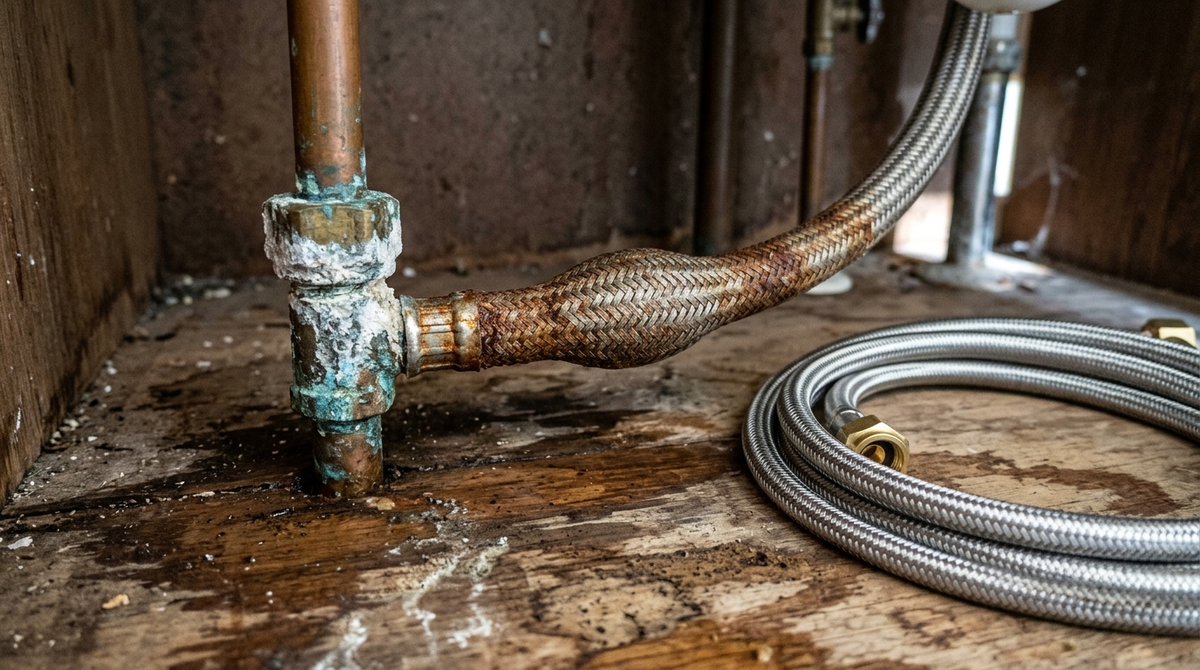
- A bulge or bubble in the hose. That means the inner tube has weakened and the braid is the only thing holding it.
- Rust or discoloration on the braid. Water has been getting into the metal, usually from a slow seep.
- A kink where the line was bent too tight to fit behind a toilet or into a cabinet.
- A damp nut or a white crust at either end. Our hard North Texas water leaves mineral buildup wherever a slow drip dries.
- A stained or warped cabinet floor under a sink.
- A shutoff valve that won't turn, or one that drips when you do turn it. If you can't stop the water, you can't stop a leak.
Small leaks add up even when nothing bursts. The EPA's WaterSense program says the average household's leaks can account for more than 9,300 gallons of water wasted every year, and that nine percent of homes have leaks that waste 50 gallons or more per day. A dripping supply nut is one of the easiest of those to fix.
What to Replace Them With
For most fixtures, a braided stainless line of the right length and fitting size is the standard replacement. A few things I pay attention to:
- Length. A line that is too long gets coiled or kinked. Too short and it is pulled tight against the nut.
- The right fitting for each end. Toilet, faucet, dishwasher and ice maker connections are not all the same size.
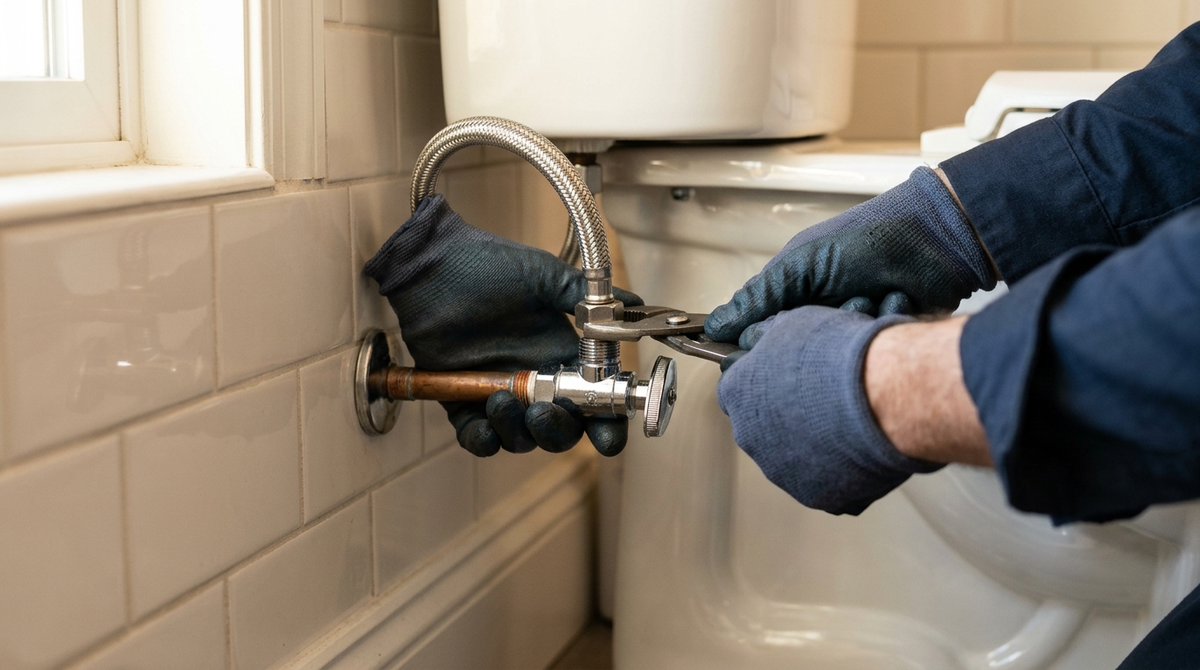
- The shutoff valve. If the old valve is stiff, corroded or dripping, replacing it at the same visit saves a second trip. A quarter-turn valve is easier to shut fast in an emergency.
- Washer hoses. Braided hoses are a better choice than rubber. Turning the washer valves off when you leave town for a while adds another layer of protection.
Can You Replace a Supply Line Yourself?
A single faucet or toilet line is a job many handy homeowners do. If the shutoff valve turns easily and seals, and the nuts come off without a fight, it is a short job.
Call a plumber when:
- The shutoff valve is stuck, leaks, or won't fully stop the water.
- The line feeds a water heater, where the connectors take heat as well as pressure.
- You have several lines to do and would rather have every connection checked in one visit.
- A line has already leaked and you are not sure what is wet inside the cabinet or wall.
What a Supply Line Visit With TD Looks Like
When you book water supply line service, here is how it goes:
- I check every line and shutoff valve in the house, not just the one you called about.
- I show you what is failing and what is fine. You get the price before anything is swapped, and good lines stay where they are.
- Worn lines and stuck valves are replaced with the right length and fitting for each fixture.
- The water goes back on and every connection is checked for leaks. I also show you where each shutoff is, so you know how to stop water fast.
If a line has already leaked into a wall or under a floor, leak detection can find where the water went before it turns into a bigger repair. And if a faucet itself is dripping, faucet repair is often a small part rather than a new faucet.
Water Supply Line FAQ
Do braided supply lines last forever?
No. They last longer than rubber, but the inside is still a flexible hose. Check them every year and replace any line that shows a bulge, rust or a damp nut.
Should I replace the shutoff valve when I replace the line?
If the valve turns easily and shuts the water off completely, it can stay. If it is stiff, crusted or drips, replace it at the same time. It is the part you rely on in an emergency.
How do I know how old my washer hoses are?
Some hoses have a date printed on them. If yours don't, and you don't remember putting them in, assume they are due and replace them.
What should I do if a supply line bursts?
Shut off the valve behind the fixture. If that won't stop it, close the main shutoff for the house, then call. TD Plumbing Solutions answers emergency calls 24/7.
Have Your Supply Lines Checked
A supply line check is one of the smallest plumbing jobs there is, and it heads off some of the biggest messes. TD Plumbing Solutions checks and replaces supply lines and shutoff valves across Benbrook, Fort Worth and the surrounding towns, and a real person answers when you call. Contact us or book a water supply line visit, and I will tell you which lines need to go and which can stay.