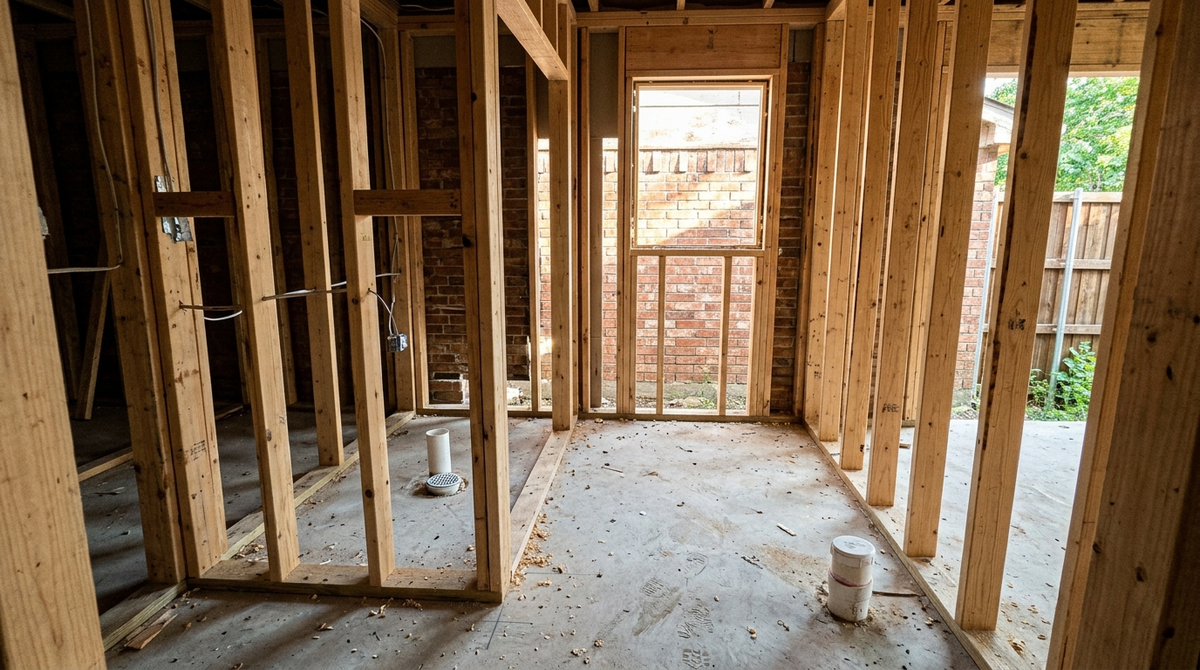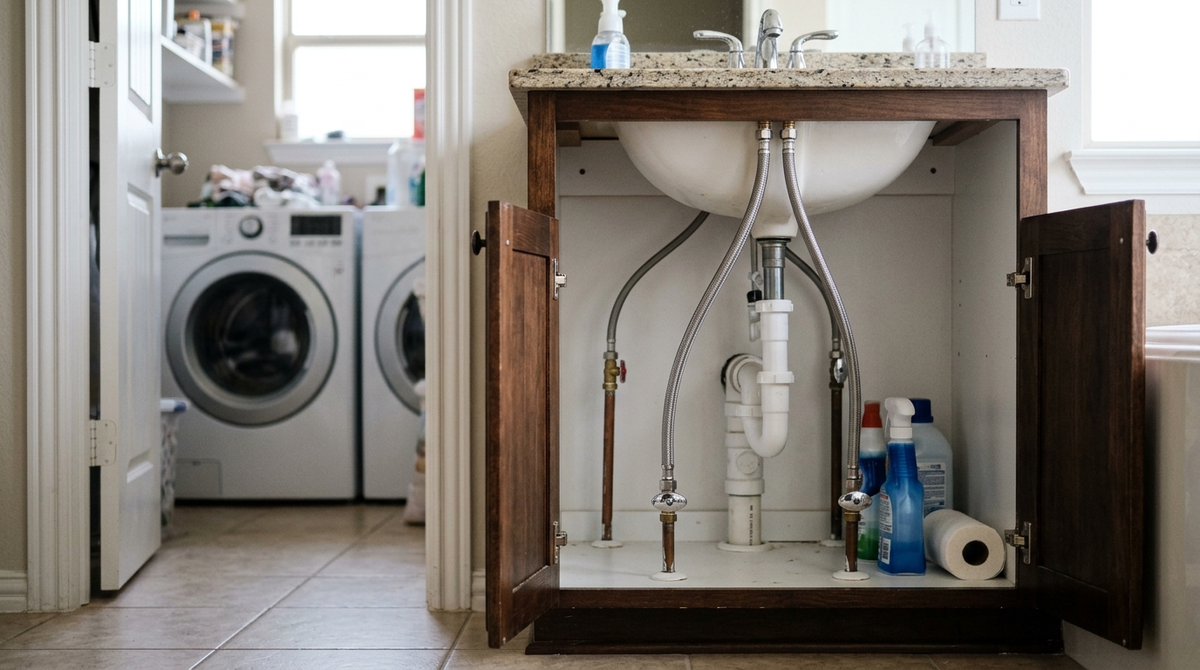
To run water to a shop, barn, guest house or detached garage, you need a new buried line from your existing water service out to the building, sized for every fixture it will feed and laid deep enough to stay protected. The planning that happens before the trench is dug, mostly the route, the line size and the shutoffs, decides whether the new building gets good pressure without taking it away from the house.
I am Terrill Dobbs, the master plumber on the license at TD Plumbing Solutions. On the bigger lots around Aledo, Weatherford, Azle and Joshua, and on plenty of Benbrook properties too, I get calls from homeowners adding a workshop sink, a bathroom in a guest house or a hose bib by the barn. Here is what I walk through with them first.
Start With What the Building Will Use
The first question is not where the pipe goes. It is what the water is for. A single utility sink and a hose bib need far less than a guest house with a shower, toilet, kitchen sink and washer.
Make a list of every fixture you want out there now, and every one you might add in the next few years. It is much cheaper to size the line for a future bathroom today than to dig the trench a second time. That list drives the line size, and the line size drives almost everything else.
Where the Line Starts: Your Side of the Meter
The water line from the meter to your house is yours, not the city's. Fort Worth Water puts it plainly in a project FAQ: the service line from the water meter to your home or business is considered private plumbing, and leak repairs on it are done by a licensed plumber at the homeowner's expense. If you are on a different water utility, ask them where their side ends. Either way, a branch line out to a shop on your side of the meter is private plumbing too.
There are two common ways to feed a new building:
- Branch off the main line between the meter and the house. This is often the most direct route, and it lets the building have its own shutoff.
- Branch off the house plumbing near where the line enters. This can work for a light load, like a single sink, if the house plumbing has the capacity.
Which one fits depends on where your meter sits, where the line runs now and how much the new building will draw. I check both before recommending one.
Planning the Route
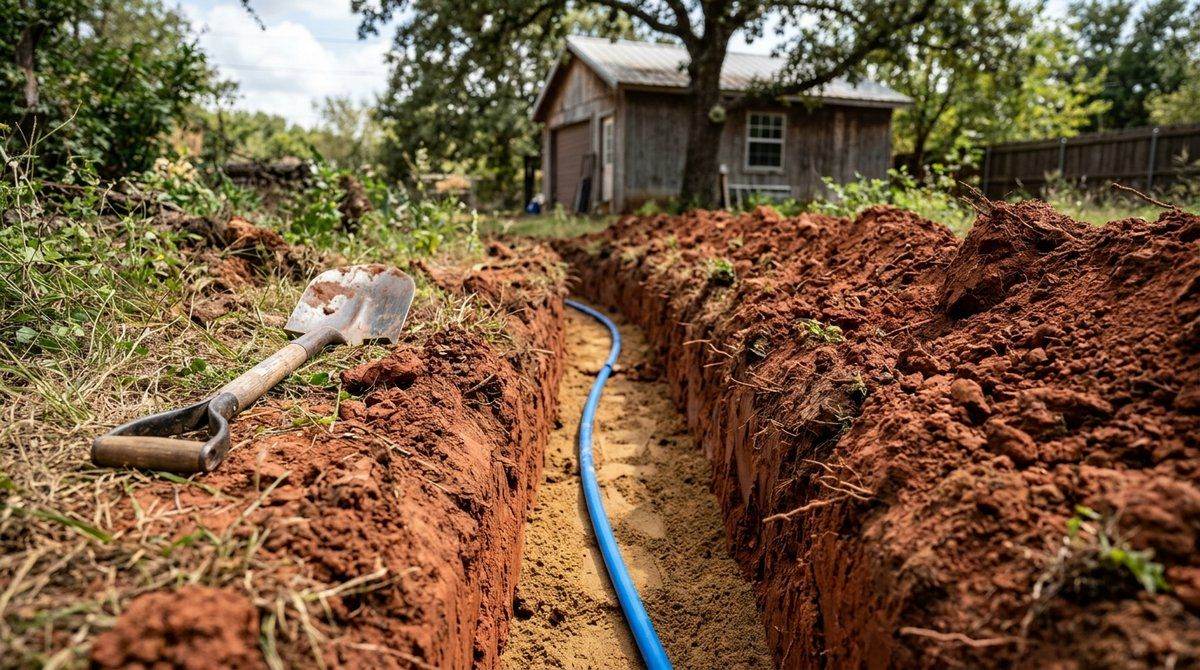
A water line runs in a trench from the tie-in point to the building. A few things shape the route:
- What is in the way. Driveways, patios, trees, septic fields and other buried lines. Gas, electric and cable lines get marked before anyone digs.
- Future plans. If a pool, slab or driveway is coming, keep the line out from under it. A line under concrete is a costly repair later.
- Length. A longer run means more trenching and more pressure loss along the way, which can mean a larger line.
- Shared trenches. If an electrician is running power to the same building, the work can sometimes be coordinated, though gas and electrical have their own rules for spacing, and each trade handles its own.
Sizing the Line So Both Buildings Keep Pressure
An undersized line is the most common problem I see with water run to outbuildings. The shop sink works fine alone, but when someone showers in the house and the guest house washer kicks on, everyone loses pressure.
Line size depends on:
- The fixtures at the far end, from that list you made.
- The length of the run, since longer runs lose more pressure.
- What your existing service can supply. If the line from the meter is already small, adding a building may show it. In some homes, the honest answer is that the main line needs upsizing too. Our post on whether to repair or replace your main water line covers that decision.
I size the line for what the building will use, then check the pressure at the house and the new building once it is in.
Depth, Clay Soil and Freezing
Hard freezes do not come often in North Texas, but they come, and a shallow line out to a shop is one of the first pipes to suffer. A line also needs enough cover to stay clear of shovels, fence posts and tillers.
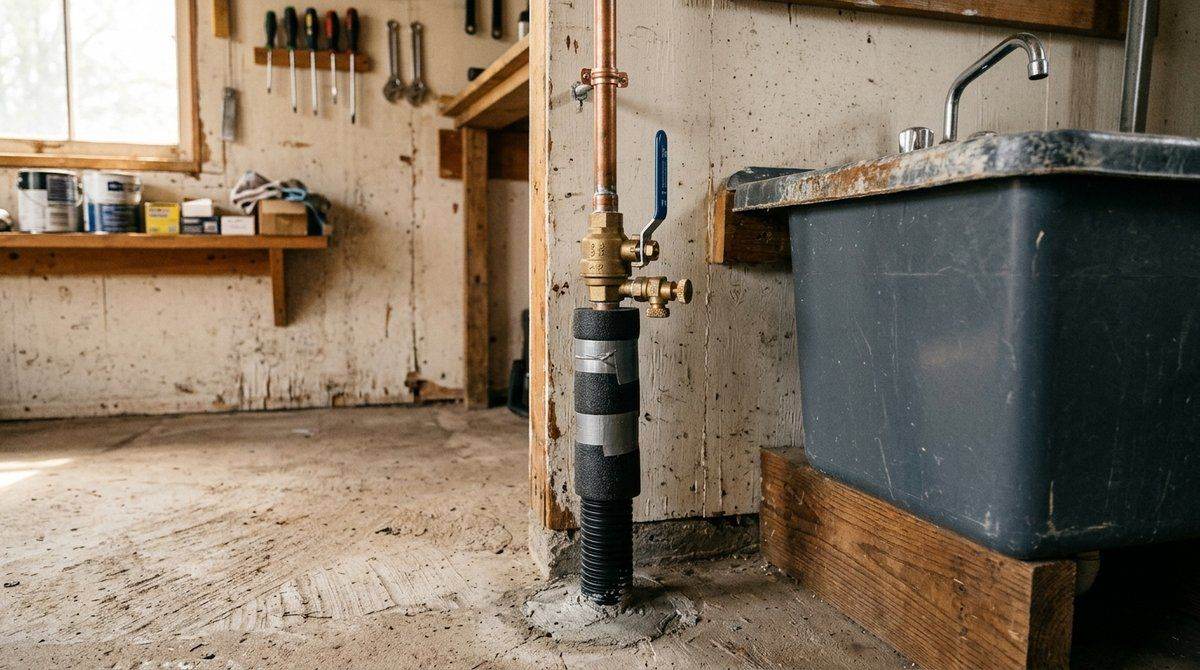
Our clay soil adds another reason to bury it properly. Clay swells when wet and shrinks in drought, and that movement stresses shallow pipe. Laying the line on good bedding at a proper depth, and protecting it where it comes up out of the ground into the building, keeps it out of trouble. Where the line rises into an unheated shop or barn, that exposed section needs insulation or a layout that lets it be drained before a freeze.
Shutoffs, Drains and the Fixtures Inside
The water line is only half the job. Plan these at the same time:
- A separate shutoff for the outbuilding, so you can turn off water to the shop without shutting down the house. This matters most in a freeze or if a fixture out there leaks while nobody is around.
- A way to drain the building's pipes if it is unheated and you will not use it in winter.
- Where the wastewater goes. A hose bib needs no drain. A sink, toilet or shower does. Tying into your sewer or septic is its own part of the project, and it often decides where the bathroom can go. If a new sewer connection is needed, that is part of our sewer line installation work.
- Hot water. A guest house usually needs its own water heater. A shop sink may not need hot water at all.
What a Water Line Installation Involves
Here is how a water line installation to an outbuilding goes with TD Plumbing Solutions:
- Walk the property. I look at the meter, the existing line, the building and what is between them, and we go over your fixture list.
- Route, size and price. You get the plan for the route and line size and the price before any work starts. Where the city requires a permit and inspection, I handle that.
- Locate and dig. Utilities are marked, then the trench is dug along the agreed route.
- Lay and connect. The line goes in on proper bedding with the tie-in and shutoff in place.
- Pressure test, then backfill. The new line is tested under pressure before the trench is closed, so any problem shows up while it is still easy to reach.
- Check both ends. I check pressure at the house and at the new building with water running.
Larger projects can be financed through Hearth.
Water Line to a Shop FAQ
Can I run a garden hose to my shop instead?
For a few weeks during a project, maybe. As a permanent setup, a hose on the ground freezes, cracks in the sun and gets cut by mowers. A buried line with its own shutoff is the lasting answer.
How far can a water line run from the house?
There is no single limit. Longer runs lose more pressure, so the line size goes up with the distance and the fixture load. I size it for your actual run.
Will a new building lower the water pressure in my house?
Not if the line and your existing service are sized for both. If the main line from the meter is small, adding a building can show it, and I will tell you that before you build.
Do I need a plumber, or can I lay the pipe myself?
Some homeowners dig their own trench, and I am glad to work from a route you have planned. The tie-in, sizing and pressure test are where mistakes get expensive, because a leak under a backfilled trench is hard to find. That part is worth having a licensed plumber do.
Talk to the Plumber Who Will Lay the Line
A water line to a shop or guest house is a one-time dig, and getting the route and size right the first time saves a second trench later. TD Plumbing Solutions runs new water lines across Benbrook, Aledo, Weatherford and Greater Fort Worth, and a real person answers when you call. Contact us or book a water line installation visit, and I will walk your property and lay out what the job takes.