
For a wet crawlspace under a pier-and-beam home, a submersible sump pump is usually the better fit, because it sits down inside the pit and needs no headroom above it. A pedestal pump keeps its motor up out of the water on a short column, which makes it easy to reach and service, but that column needs vertical space that most crawlspaces do not have.
I am Terrill Dobbs, the master plumber on the license at TD Plumbing Solutions. Around Benbrook and Fort Worth, nearly every sump pump I see is under a house, not in a finished room, so the choice looks a little different here than it does in the guides written for other parts of the country. Here is how I help homeowners pick.
How the Two Types Work
Both pumps do the same job. Water collects in a pit at the low spot, a float rises with it, and the float switches the pump on. The pump pushes the water up and out through a discharge pipe to a spot that drains away from your foundation, then shuts off when the pit is low again.
North Dakota State University Extension describes the difference simply: sump pumps come in two basic models, upright (commonly called a pedestal) and submersible. A submersible is built to sit on the bottom of the pit under water. On a pedestal pump, the motor usually sits about a foot above the top of the pit.
That one detail, where the motor lives, drives almost every other difference between them.
Pedestal Sump Pumps: Pros and Cons
A pedestal pump has a small pump at the bottom of the pit and a column that holds the motor up in the air. The float is usually a rod that rides alongside the column.
What works in its favor:
- The motor stays dry. Because it never sits in water, the motor is easy to see, reach and swap.
- Simple to service. A worn switch or motor can often be changed without pulling the whole unit out of the pit.
- Fits a narrow pit. The part that sits in the pit is slim.
What works against it:
- It needs headroom. The motor stands above the pit. Under a pier-and-beam floor, you may not have that much space between the dirt and the joists.
- It is louder. The motor runs out in the open with nothing around it to quiet it, and in a crawlspace that sound travels up through the floor.
- The motor is exposed. In a damp crawlspace, an open motor sits in humid air full time.
Submersible Sump Pumps: Pros and Cons
A submersible pump is one sealed unit. The motor and pump sit together at the bottom of the pit, under the water they move.
What works in its favor:
- Low profile. Everything sits inside the pit, so it fits under a low floor and can be covered with a lid.
- Quieter. The water and the pit around it muffle the motor.
- Covered pit. A lid keeps debris, soil and critters out of the pit, which matters in a crawlspace.
What works against it:
- Harder to reach. Any repair means lifting the pump out of the pit.
- The seals matter. The motor depends on its seals to stay dry, so a cheap pump with poor seals is a bad bargain.
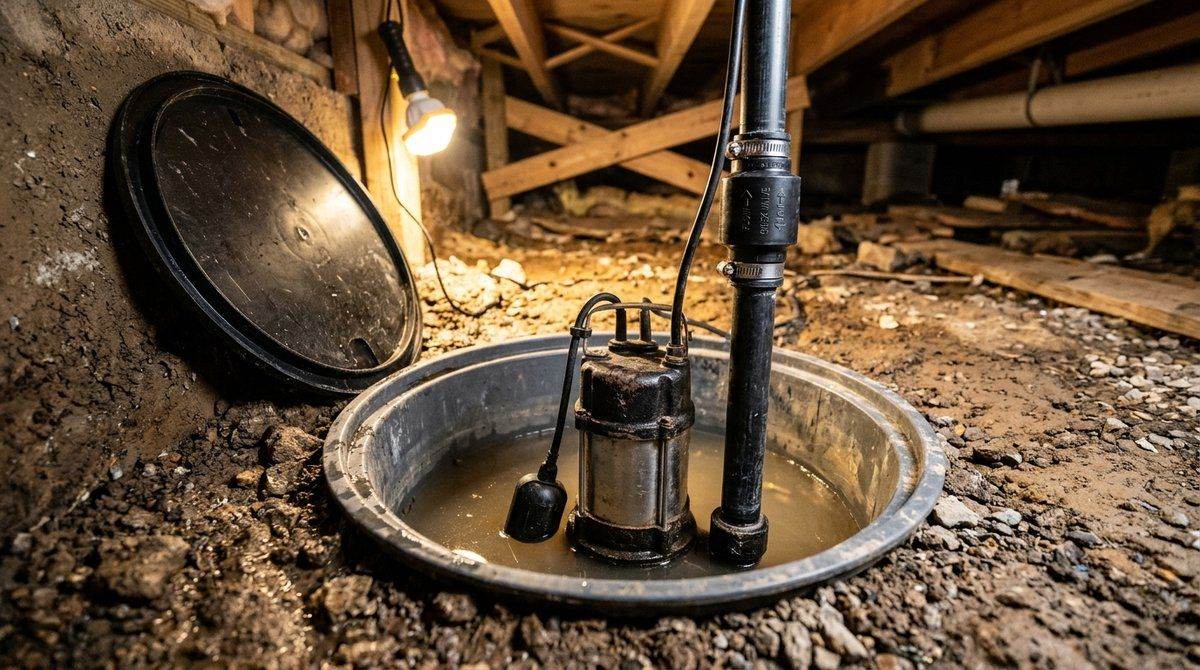
Why Crawlspaces in Benbrook and Fort Worth Usually Get a Submersible
Most sump pumps around here go in because water collects under an older pier-and-beam house on a low lot. Our clay soil takes water in slowly, so after a big storm it sits on top and runs toward the lowest point, which is often under your floor.
That setting decides most of the question:
- Clearance is tight. A crawlspace may give you a couple of feet to work in, and the pit has to go at the lowest spot, which is rarely where the most headroom is.
- It is out of sight. Nobody is down there checking on a pump every week, so a covered, sealed unit that runs without attention is usually the safer pick.
- Noise carries up. A pedestal motor running under a bedroom is easy to hear.
A pedestal pump can still make sense where there is room around the pit and you want the motor easy to reach, such as a pit in a utility room, a low spot in a garage, or a yard pit with an open housing. That is the call I make on site, not from a catalog.
What Matters More Than the Type
The pump type gets most of the attention, but these details decide whether a sump pump actually keeps your crawlspace dry.
Where the water is coming from
Before any pump goes in, I find out whether the water is rain or a plumbing leak. A slow leak from a supply line or drain under the house can look a lot like storm water. A sump pump will not fix a leak, and a leak will keep feeding the pit. If that is what I find, the fix is leak detection and a repair, not a pump.
The check valve
A check valve is a one-way valve on the discharge pipe. Without one, the water in the pipe runs back into the pit every time the pump shuts off, and the pump has to move the same water again. That extra cycling wears out the switch and motor early. Every pump I install gets one.
Where the discharge pipe ends
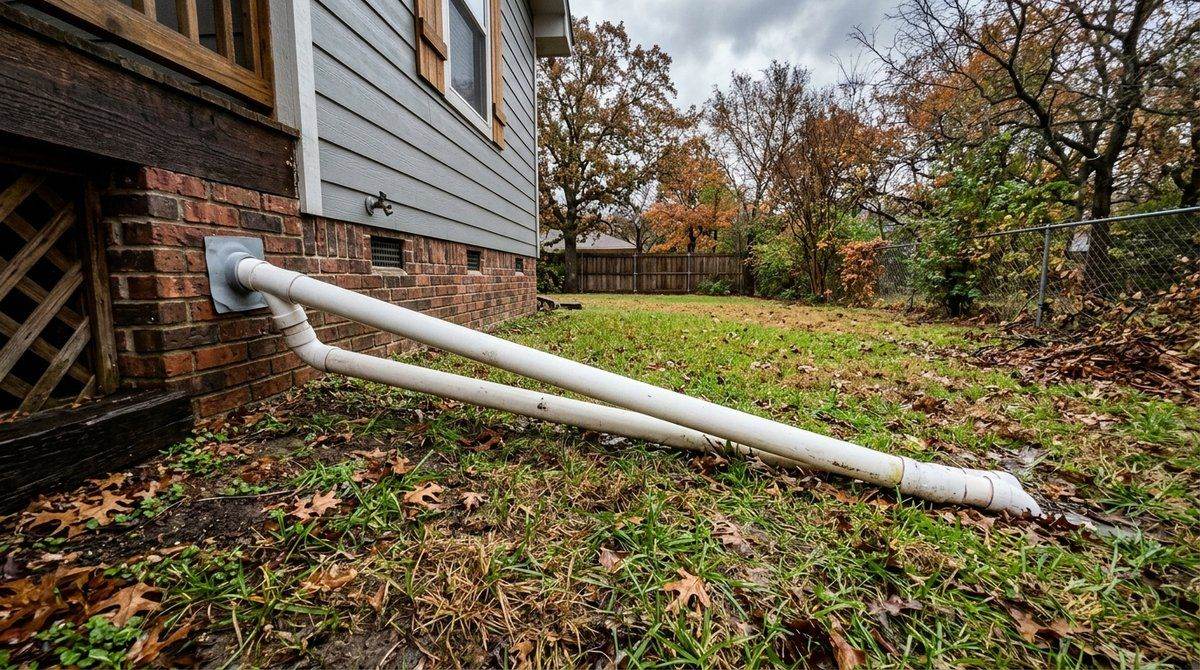
The water has to leave somewhere that drains away from the house. A pipe that dumps next to the foundation sends the water right back under the floor. The outlet is planned with the slope of your yard in mind.
The float switch
NDSU Extension also notes that a common problem is a float switch that does not make good electrical contact, so the pump turns on slowly or not at all. The float needs room in the pit to rise and fall without catching on the wall or the cord.
Power
A sump pump needs a working outlet nearby. If there is no power under the house, adding a circuit is a job for an electrician, and I will tell you that up front so both trades can be planned together.
What a Sump Pump Installation Involves
Here is what a sump pump installation with TD Plumbing Solutions looks like:
- Find the source. I check whether the water is rain or a leak, and where it collects after a storm.
- Pick the spot and the pump. The pit goes at the low point. I tell you which type fits your space and why, with the price before any work starts.
- Dig and set. The pit is dug, the pump and float are set, and the check valve goes on the discharge line.
- Route the outlet. The discharge pipe runs out to a spot that drains away from the house.
- Test it. I fill the pit with water and watch the pump start, empty the pit and shut off, more than once, before I leave.
If you already have a pump that is acting up, it may not need replacing at all. A stuck float or a failed check valve is often a small fix. Our sump pump repair service starts with testing the pump you have.
How to Keep Either Type Working
Whichever pump you have, test it before the wet season. NDSU Extension recommends lifting the float or pouring water into the pit and making sure the pump turns on and off at least twice. In North Texas, our heaviest rain tends to come in spring storms, so late winter is a good time to check.
Other habits that help:
- Keep the pit lid on and the pit clear of dirt and debris.
- Walk the discharge pipe after a storm and make sure the outlet is clear.
- If the pump runs when it has not rained in a while, call. That can mean a hidden leak is feeding the pit.
Pedestal vs Submersible Sump Pump FAQ
Which sump pump lasts longer, pedestal or submersible?
Pedestal motors stay out of the water, so they are often said to last longer and are easier to repair. In practice, how often the pump runs, whether it has a check valve and the quality of the unit matter more than the type.
Can I put a pedestal pump in a crawlspace?
Sometimes, if there is enough headroom above the pit. In most pier-and-beam crawlspaces around Benbrook, there is not, so a submersible is the usual fit.
Do I need a sump pump if water only sits under the house after big storms?
Water that sits under a house for days soaks beams and raises the humidity in the rooms above. If your crawlspace stays wet after storms, a pump is worth a look. If it is wet when it has not rained, have it checked for a leak first.
Can you replace my pump with a different type?
Yes. If the pit and discharge line are in good shape, switching types is usually straightforward. I will check the pit size and the clearance first.
Talk to a Master Plumber Before You Buy a Pump
The right sump pump depends on your crawlspace, your lot and where the water is coming from. TD Plumbing Solutions installs and repairs sump pumps across Benbrook and Greater Fort Worth, and a real person answers when you call. Contact us or book a sump pump installation visit, and I will tell you straight which pump fits your home, or whether you need one at all.