Repair your sump pump when a single part has failed, such as a stuck float switch, a bad check valve or a clogged outlet pipe, because those fixes are small and the pump itself still has life in it. Replace it when the motor has burned out, the pump fails again and again, or it can't move water as fast as it comes in.
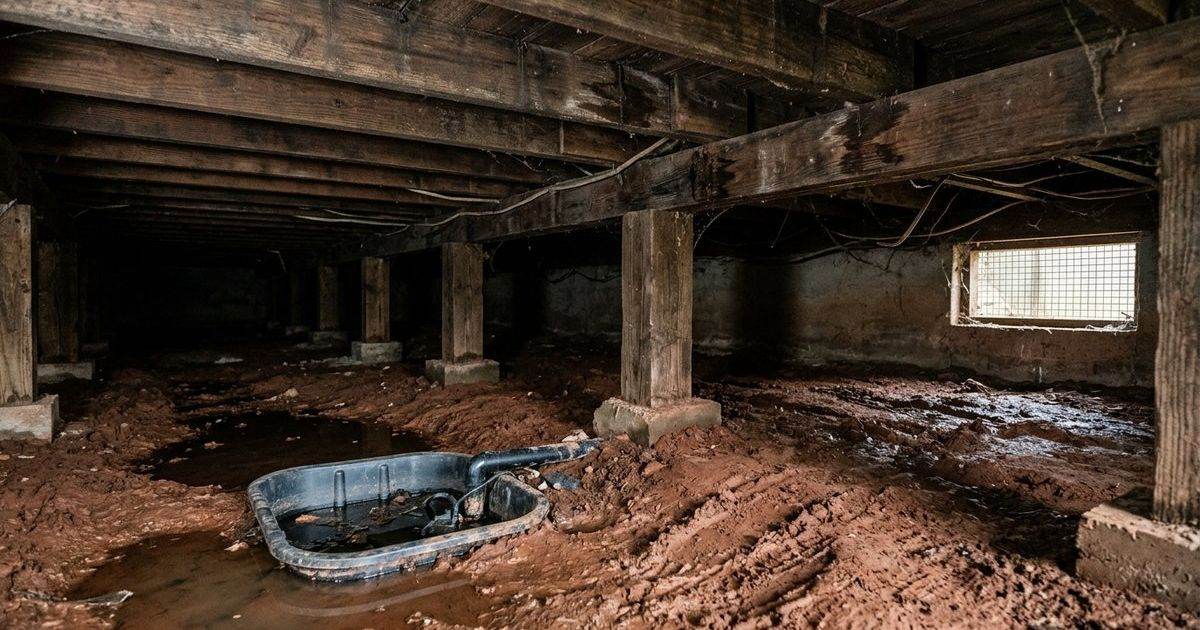
I am Terrill Dobbs, the master plumber on the license at TD Plumbing Solutions. Most of the sump pumps I work on around Benbrook and Fort Worth sit in a crawlspace under a pier-and-beam house, and most of the calls come during or right after a heavy storm. Here is how I work out whether a pump needs a part or a replacement, and what you can safely check before you call.
What Usually Goes Wrong With a Sump Pump?
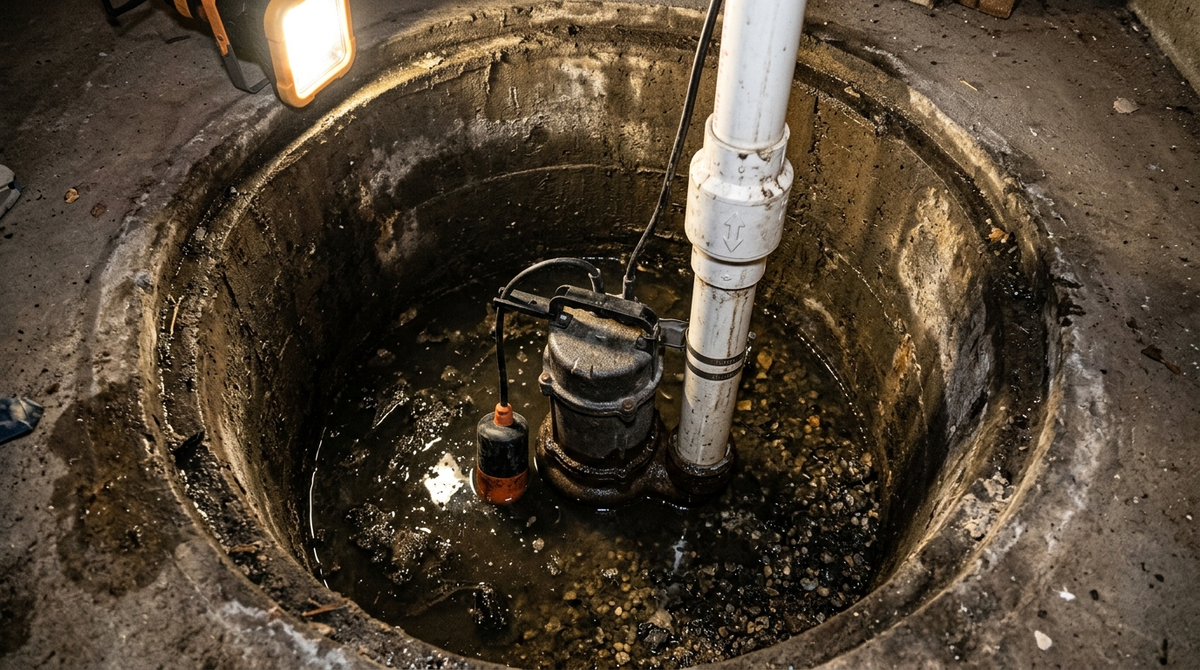
A sump pump is a simple machine: a pit collects water, a float rises with it and switches the pump on, the motor spins an impeller that pushes the water out through a pipe, and a one-way check valve stops that water from running back into the pit. When a pump stops working, it is usually one of these parts.
- Float switch. The float can get stuck on the pit wall, on the pump's own cord or on debris. Stuck down, the pump never turns on. Stuck up, it never turns off.
- Check valve. If it fails, water drains back into the pit after every cycle and the pump runs the same water over and over. Pentair, a sump pump maker, also notes that a check valve installed backwards or stuck closed will stop water leaving at all, and that the valve usually has an arrow on it indicating water flow.
- Outlet pipe. A crushed, clogged or frozen discharge pipe leaves the pump pushing against a blockage.
- Motor and impeller. A jammed impeller or a worn-out motor shows up as a pump that hums but moves no water, or one that trips the breaker.
- Power. A tripped breaker, a dead outlet or an unplugged cord is more common than you would think.
What to Check Before You Call
You can rule out a few things yourself. Unplug the pump before you reach into the pit, every time.
- Check the power. Look for a tripped breaker or a tripped outlet, and make sure the pump is plugged in.
- Look at the float. With the power off, check that nothing is holding the float up or down: a cord, a stick, mud or gravel.
- Listen after it shuts off. If you hear water rushing back into the pit right after the pump stops, the check valve is likely the problem.
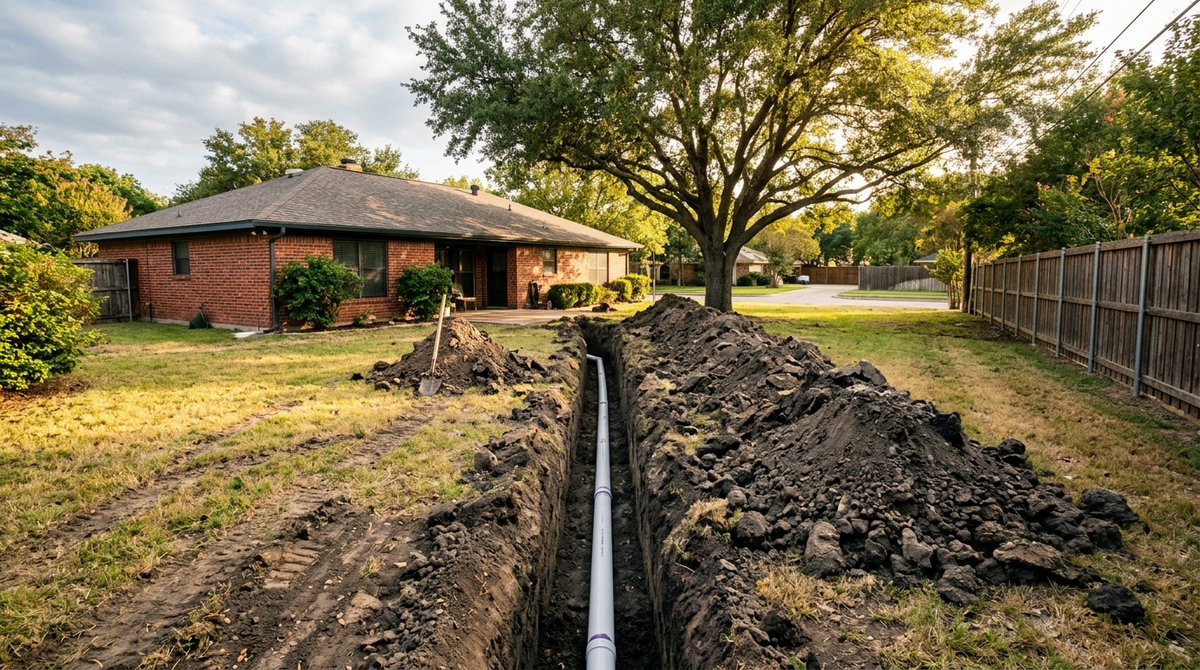
- Follow the outlet pipe outside. Make sure the end isn't buried, crushed or blocked, and that it drains away from the house instead of back toward the foundation.
Pentair's troubleshooting guide says a pump that runs nonstop has either a lot of water coming in or the float switch is stuck in the ON position. Telling those two apart is the first thing I do on a call.
If the crawlspace is tight, wet or has wiring you aren't sure about, stop there and call. A crawlspace full of water is not a place to be working around electrical cords.
When Repair Makes Sense
Repair is usually the right answer when:
- The pump is fairly new and the motor runs strong. If it moves water well once the float is freed, the pump is fine.
- The failure is one part. A float switch, a check valve or a section of outlet pipe is a small fix next to a new pump.
- The problem is outside the pump. A frozen or crushed outlet line, or a tripped circuit, isn't the pump's fault at all.
When I come out, I fill the pit with water and watch the float, motor and check valve work, or fail, in real time. Then I tell you what failed and give you two prices: one to fix it and one for a new pump. If yours can be fixed, I will fix it.
When Replacement Makes More Sense
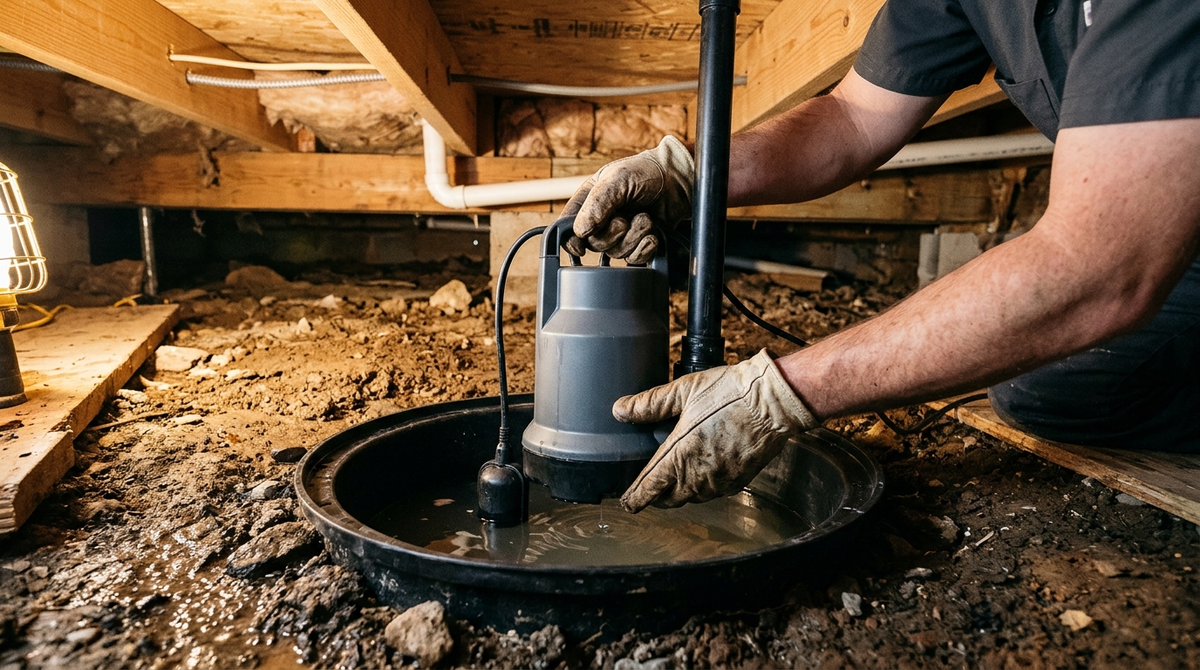
A new pump is usually the better spend when:
- The motor hums but nothing moves, and freeing the impeller doesn't bring it back.
- The pump is old and has started failing in more than one way. Fixing a float on a pump that is also rusting through and running hot just buys a few months.
- It can't keep up. If the pit keeps filling faster than the pump empties it during a storm, the pump is too small for the water coming in, or there is a bigger drainage problem to look at.
- It is the wrong pump for the space. Many crawlspaces do better with a submersible pump than a pedestal pump. I explain why in pedestal vs submersible sump pumps for crawlspaces.
- The pit itself is the problem. A pit that is too small makes any pump cycle on and off constantly, which wears out the motor.
When a replacement is the right call, I set the new pump, check the float height and the check valve, and run it through several cycles before I leave. That work is on the sump pump installation page.
Why Sump Pumps Fail When You Need Them Most Around Fort Worth
Crawlspace pumps around here have a rough schedule. They can sit idle through a long, dry North Texas summer, and then the first big fall storm arrives. A float that stuck in the dry months doesn't lift, and you find out when the crawlspace is under water.
Hard freezes cause the other kind of trouble. North Texas doesn't freeze often, but when it does, water left in an outlet pipe can freeze solid, as the February 2021 winter storm showed. A pump pushing against a frozen pipe can burn itself out.
That is why I suggest testing the pump before storm season. With the power on, slowly pour a bucket of water into the pit and watch: the float should rise, the pump should start, empty the pit and shut off on its own.
What Drives the Cost of a Sump Pump Repair?
I test before I quote, because the price depends on what actually failed. These are the things that move it:
- Which part failed. A float or check valve costs far less than a new pump.
- The pump's age and condition. It decides whether a repair is worth doing at all.
- The outlet pipe. A clogged or damaged run outside adds work.
- Crawlspace access. Tight or flooded crawlspaces take longer to work in.
You see the repair price and the new-pump price before any work starts, and larger jobs can be financed through Hearth.
Sump Pump Repair FAQ
Why does my sump pump keep running when it isn't raining?
Usually a stuck float or a failed check valve letting the same water flow back into the pit. Groundwater can also keep a pit filling for days after a big storm. If it runs with the pit empty, turn it off and call.
Can you fix a sump pump you didn't install?
Yes. I work on pumps no matter who put them in.
Is a failed sump pump an emergency?
If it is raining and water is rising under the house, yes. Standing water in a crawlspace can damage the floor framing and ductwork. TD answers emergency calls 24/7.
How often should I test my sump pump?
Before the spring and fall storm seasons at a minimum, and after any long dry spell. Pump makers' manuals give their own schedules, so check yours.
Get a Straight Answer on Your Pump
If your sump pump has stopped, runs nonstop or cycles every few seconds, you don't have to guess whether it needs a part or a replacement. TD Plumbing Solutions handles sump pump repair across Benbrook, Fort Worth, Aledo and the towns around them, and a real person answers the phone 24/7. Contact us or call (817) 229-9450, and I will test the pump, tell you what failed and give you both prices before any work starts.