Replace a toilet when the tank or bowl is cracked, when you are fixing it every few months, or when it is an older model that uses far more water than a new one. If the problem is a flapper, a fill valve or a worn wax ring on a sound toilet, a repair is usually the better call.
The real question is whether the porcelain and the base are still sound. Here is how I think it through when I am standing in your bathroom.
Repair or Replace? The Short Answer
Most toilet problems live in the tank. The flapper, the fill valve and the seals are small parts, and they wear out faster here because of our hard water. Swapping them is a normal repair, not a reason to buy a new toilet.
A toilet is worth fixing when:
- The porcelain has no cracks in the tank or bowl.
- It flushes well once the worn part is replaced.
- It is a newer, low-flow model that you like.
- The problem is one part, not a string of different failures.
If your toilet runs or refills on its own, start with our toilet repair service. We wrote a separate guide on why your toilet keeps running and what it does to your water bill, so I will not repeat that here.
The rest of this post is about the cases where repair stops making sense.
Signs It Is Time to Replace a Toilet
Some problems cannot be fixed with a part from the tank. When you see one of these, a new toilet is usually the honest answer.
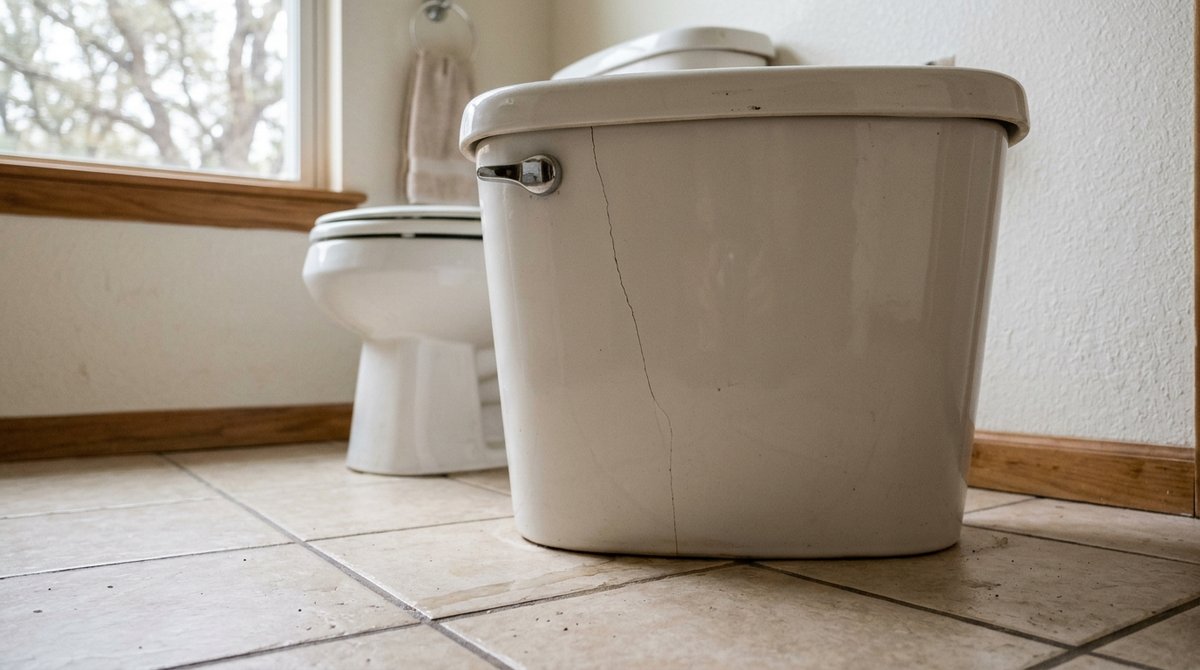
A crack in the tank or bowl
Porcelain does not repair well. A hairline crack in the tank can seep for months, then split when you least expect it. A crack below the waterline of the bowl can leak onto the floor every time you flush. Patches and sealants are short-term at best. If water is involved, replace the toilet.
You keep calling about the same toilet
One flapper is a small job. A flapper in spring, a fill valve in summer and a handle in fall adds up. At some point, the money spent keeping an old toilet alive is better spent on a new one.
It rocks, or leaks at the base
A toilet that rocks when you sit on it has broken or will soon break the wax seal underneath. Water and waste can then leak into the floor where you cannot see it. Sometimes a new wax ring and proper setting fixes it. But if the flange, the ring that ties the toilet to the drain, is cracked or rusted, it has to be repaired first. And if the toilet base itself is chipped or warped, a new toilet is the better fix.
It clogs all the time
If you are plunging every week, the problem may be the toilet or the drain past it. We check which first. If the drain is clear and the toilet still clogs, the bowl design is often the cause.
It is an old high-flush model
Toilets made before the federal low-flow rules use a lot of water every flush. If your Benbrook or Fort Worth home was built decades ago and the toilet has never been changed, it may be one of these. A working old toilet is not an emergency, but it is the easiest water savings in the house.
How Much Water a New Toilet Saves
This is where replacing can pay you back. According to the EPA WaterSense program, older toilets can use as much as 6 gallons per flush, while WaterSense labeled toilets use 1.28 gallons per flush or less. The EPA says that is 20 percent less water than the current federal standard of 1.6 gallons per flush.
Early low-flow toilets earned a reputation for clogging, but designs have improved a great deal since then. Look for the WaterSense label on the box or spec sheet. Hard water still leaves scale in the rim holes of any toilet over time, so a new one is not maintenance-free.
How to Choose a New Toilet
The bowl you pick matters less than how it is set. Still, a few choices make a real difference in daily use. Here is what to decide before you buy.
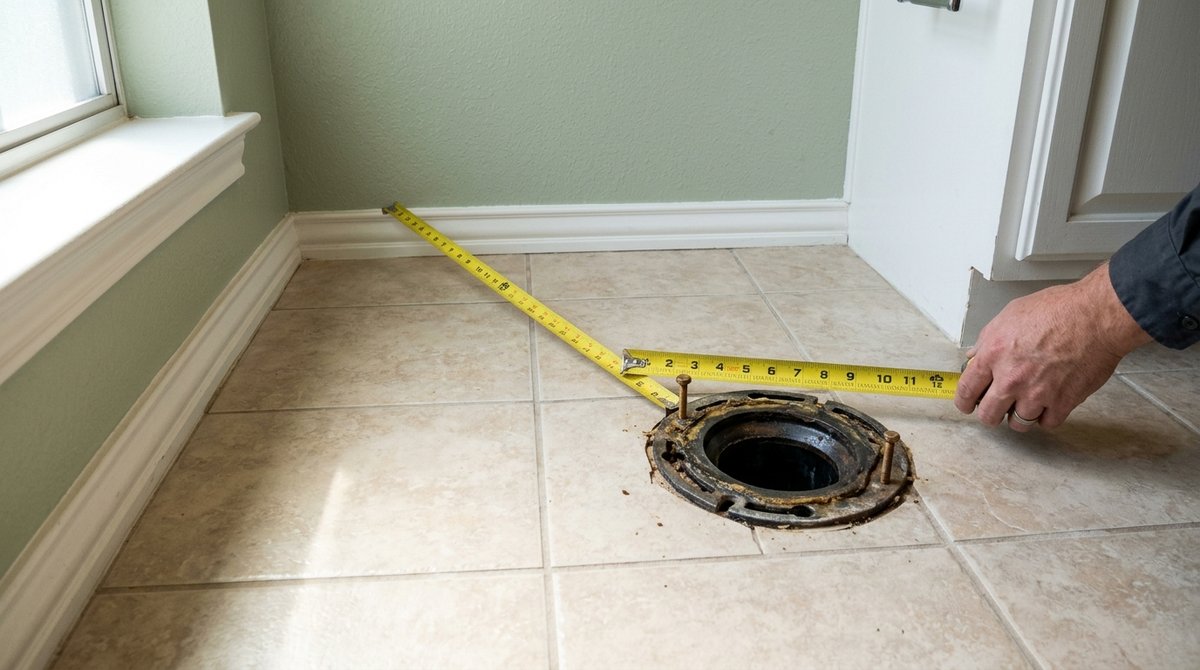
Measure the rough-in first
The rough-in is the distance from the finished wall behind the toilet to the center of the drain. Measure from the wall, not the baseboard, to the center of the bolts that hold the toilet down. Most homes are 12 inches. Some older homes have a 10 or 14 inch rough-in, and a toilet made for 12 will not fit right there. If you are unsure, ask before you buy. It saves a trip back to the store.
Comfort height or standard height
Comfort height toilets sit a few inches higher than a standard toilet, closer to the height of a chair. Many people find them easier to sit on and stand up from, especially with sore knees or hips. Shorter adults and young children sometimes prefer standard height. It installs the same way and uses the same drain.
Elongated or round bowl
| Bowl shape | Good for | Keep in mind |
|---|---|---|
| Elongated | Comfort for most adults | Sticks out a couple of inches further into the room |
| Round | Small half baths and tight spaces | Less seat room |
Measure the space in front of the toilet and how the door swings before you choose elongated in a small bathroom.
One-piece or two-piece
A two-piece toilet, with a separate tank and bowl, is the most common and simplest to set. A one-piece toilet has no seam, so it is easier to clean, but it is heavier and takes more care to install. You can buy the toilet yourself and have us set it, or ask what we would suggest.
What a Professional Toilet Install Includes
A new toilet that is set badly will leak, rock and fail early. A good install takes care of the flange, floor and valve as well as the bowl. This is how our toilet installation service works:
- Check what is there. I look at the drain spacing, the shutoff valve and the floor. You get the price before work begins.
- Remove the old toilet. We drain it, pull it and scrape off the old wax, then inspect the flange and the floor under it.
- Set the new toilet. A new wax seal goes down, the bowl is set level and the bolts are tightened evenly so the porcelain does not crack.
- Connect and test. We fit a new supply line, flush several times and check the base and the valve for leaks.
A few things can add time:
- A broken or rusted flange has to be fixed first.
- A stiff or leaking shutoff valve is best replaced while the toilet is off.
- New flooring can raise the floor above the flange, so the flange may need an extender to seal right.
- Soft subfloor has to be fixed before the toilet can sit solid.
Why the floor matters here
Many older homes around Benbrook sit on pier-and-beam foundations, a wood floor over a crawlspace. Years of small leaks at a toilet base can soften the wood underneath. We check for that and tell you what we find before any extra work.
Newer homes often sit on concrete slabs. North Texas clay soil swells when it is wet and shrinks in drought, and that can shift a slab a little over time. We level each toilet to the floor as it sits today, so it does not rock.
We can haul the old toilet away if you tell us when you book. Our workmanship is backed by a warranty, and we pursue the manufacturer warranty on the parts we install.
FAQ
How long does a toilet last?
The porcelain itself can last for decades if it is not cracked. The parts inside the tank wear out much sooner and get replaced along the way. The better question is whether the toilet still flushes well, has no cracks and is not wasting water.
Can I reuse my old wax ring or supply line?
No. A wax ring seals once and should always be replaced when a toilet comes up. An old supply line is cheap to replace while everything is apart, and it is one less thing to fail later.
Is it worth replacing a toilet that still works?
If it is an old high-flush model, often yes, for the water savings. If it is a newer low-flow toilet that flushes well, there is usually no reason to replace it unless you want a different height or shape.
Do I need a permit to replace a toilet?
A straight swap of a toilet usually does not involve moving any drain lines. If the drain or water lines need to be moved, the work is permitted and inspected through the city where required. Rules differ between Benbrook, Fort Worth and other Tarrant County cities, so check with your city.
Thinking About a New Toilet in Benbrook?
If you are not sure whether your toilet needs a part or a replacement, I will look at it and tell you plainly. If a repair will do the job, that is what I will recommend. When it is time for a new one, I check the flange, floor and valve, give you the price before work starts, and set the toilet myself, often with my son. Financing through Hearth is available for larger projects.
Book toilet replacement in Benbrook or contact us to schedule a visit anywhere in Benbrook and Greater Fort Worth. When you call us, a real person answers, day or night.